Cities of the Dead, Part I
It’s not a shocker: New Orleans has a lot to offer, but The Big Easy is — first and foremost — a party city.
Carnival season, or the weeks leading up to and including Mardi Gras, is the most festive in NOLA by far. Everyone decorates their homes, businesses pull out all the stops and smaller parades lead up to the big event on Shrove Tuesday. I’m sure purple, green and gold are more than common colors to see in New Orleans at any given time, but the weeks leading up to Fat Tuesday provide an extraordinarily festive atmosphere with a background draped in those hues.
I speak with some semblance of authority because I just returned from NOLA. OK, let’s be real, I only spent three days there in February, but I do feel like I had the chance to soak up a lot of the local culture and flair. And outside of the beads and decorations, the city has so much to offer, including by way of food and beverages — not only did I enjoy the first (ahem, of many) Sazerac of my life, but I crossed one off the ol’ bucket list and drank a bourbon on Bourbon Street.

But something else really caught my attention: the cities of the dead.
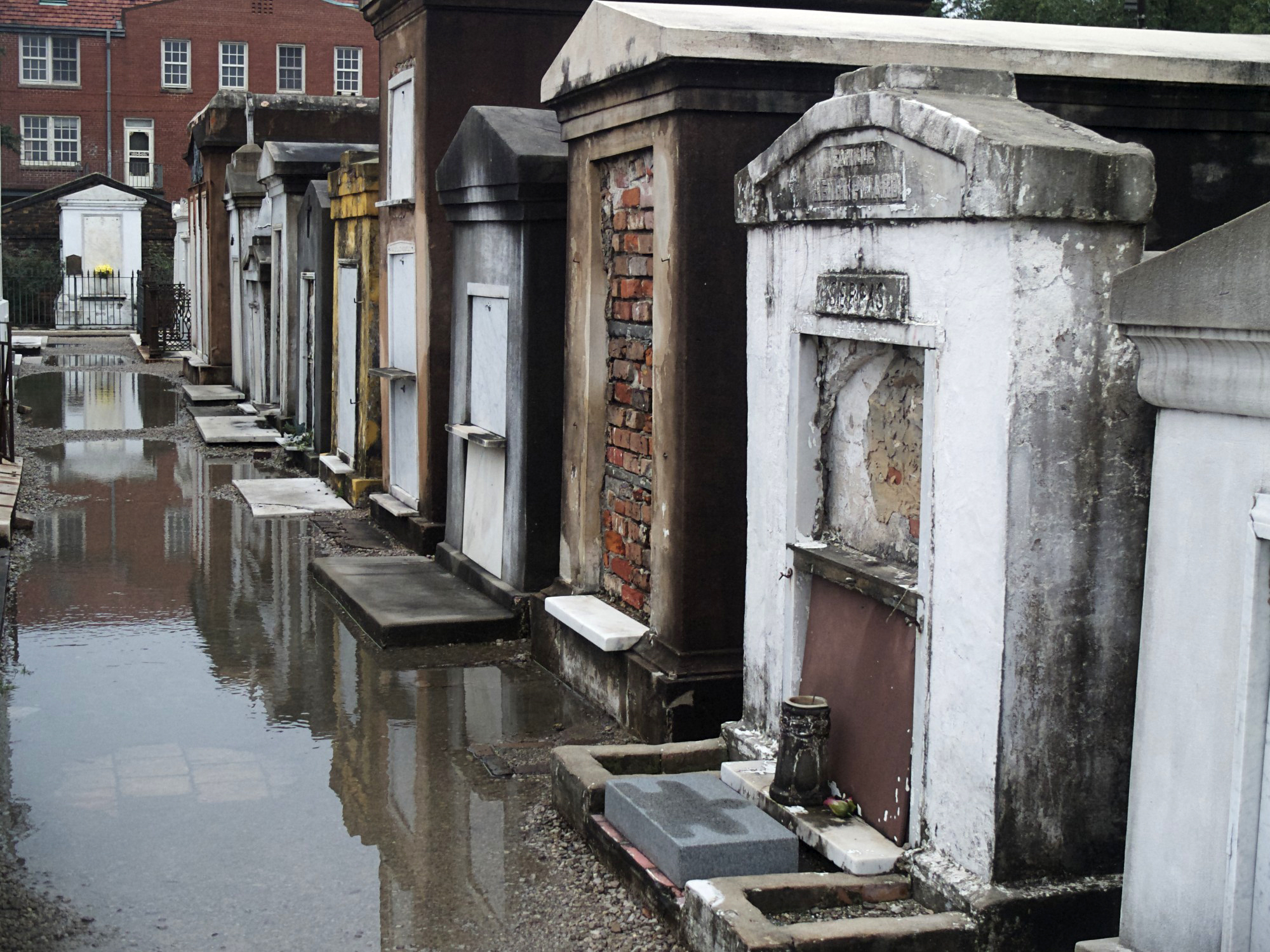
An alley in St. Louis No. 1, a city of the dead. *
Before we even set foot in New Orleans, my faithful travel buddy and aunt, Kathy, and I knew we wanted to see a cemetery. After all, I would wager its cemeteries are another top draw to NOLA outside of Mardi Gras.
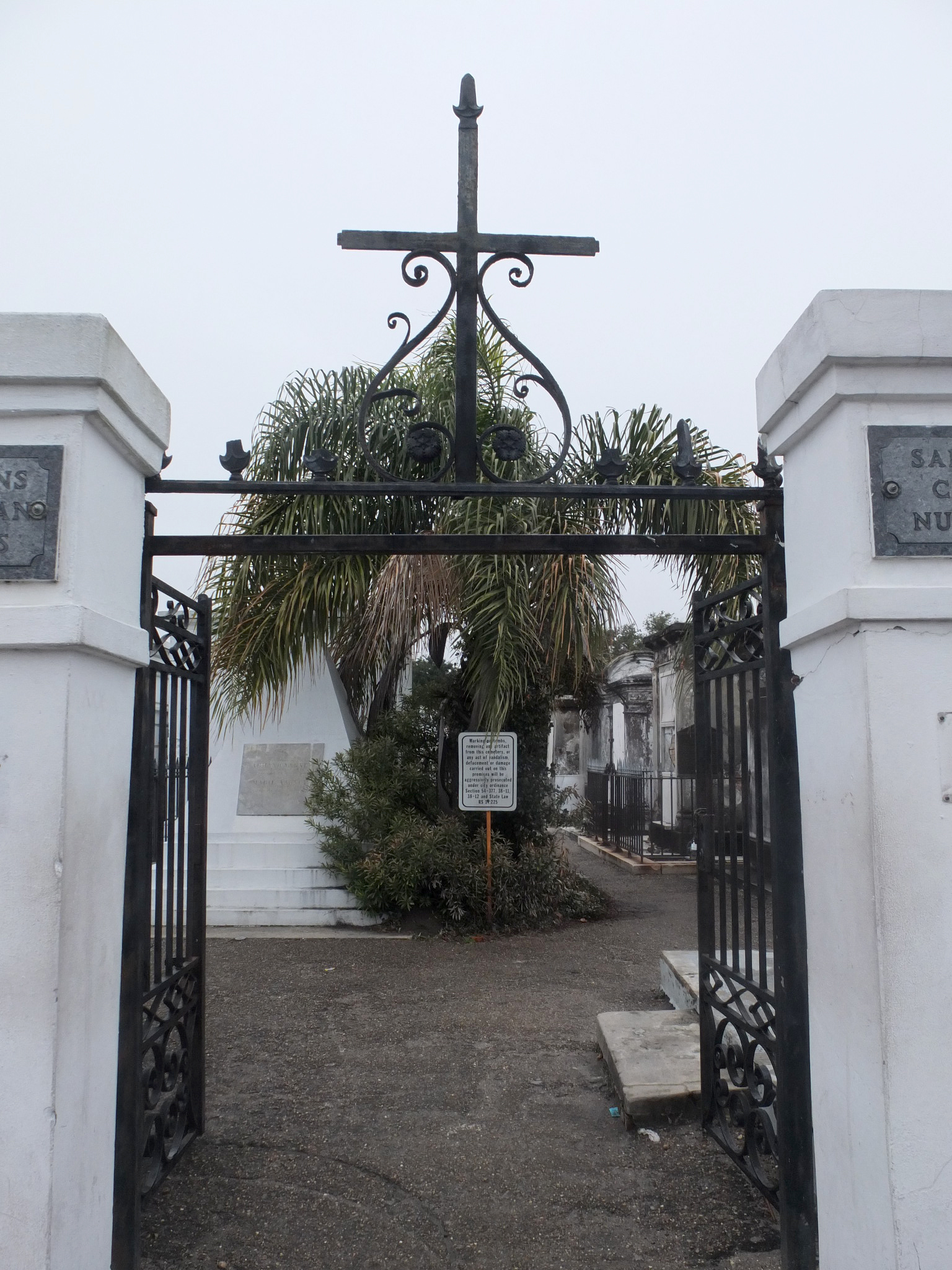
The entrance to Saint Louis No. 1. *
We had the pleasure of going on a tour of Saint Louis No. 1 with Renee from Haunted History Tours. (The next day, we also visited Saint Louis No. 3 on our own.) I would highly recommend seeing the sights of the cities of the dead with a guide who knows what they’re talking about; it really adds to the experience. That being said, I would also highly recommend the tour we did with Renee; she was just great.
Burial Practices in New Orleans: A (Very) Brief History
Before above-ground burials became popular in New Orleans, the Saint Peter Street Cemetery — founded in the 1720s — played host to many of the dead underground.
But keep in mind, a big part of NOLA is located below sea level and already has a high water table. And when it rained, it had the propensity to flood — and flood it did. For awhile there, it was not uncommon for bodies to become dislodged and float down the street. Not only is that incredibly unsanitary, but I have to imagine it would also be incredibly unsettling to see your dearly departed relative again after you already put them in the ground … months ago.
Anyway.
The Saint Peter Street Cemetery was closed in the late 1780s due to overcrowding and its location, which officials feared could have caused an epidemic similar to the one the city had just recently experienced. There is definitely evidence out there that the city block the first cemetery was once located on might still have some of the city’s earliest residents underneath.
Eventually, New Orlinians wizened up and realized above-ground burials really were the way to go, a practice that continues to this day.

Saint Louis No. 1. *
Saint Louis No. 1 was founded in 1789 and is New Orleans’ oldest cemetery in existence. It is still an active burial ground to this day — we saw several graves dated 2013, and Renee told us they weren’t even the most recent burials.
Types of Tombs
Once above-ground burials became the norm, a few broad types of tombs sprung up (just walking around one of the city’s cemeteries will show you there are many variants on these, as well as a few not even covered). Three are still very common today, and one less so; let’s begin there.
Step tombs are one-use-only tombs, and in a city that has historically been short on space, the least common.
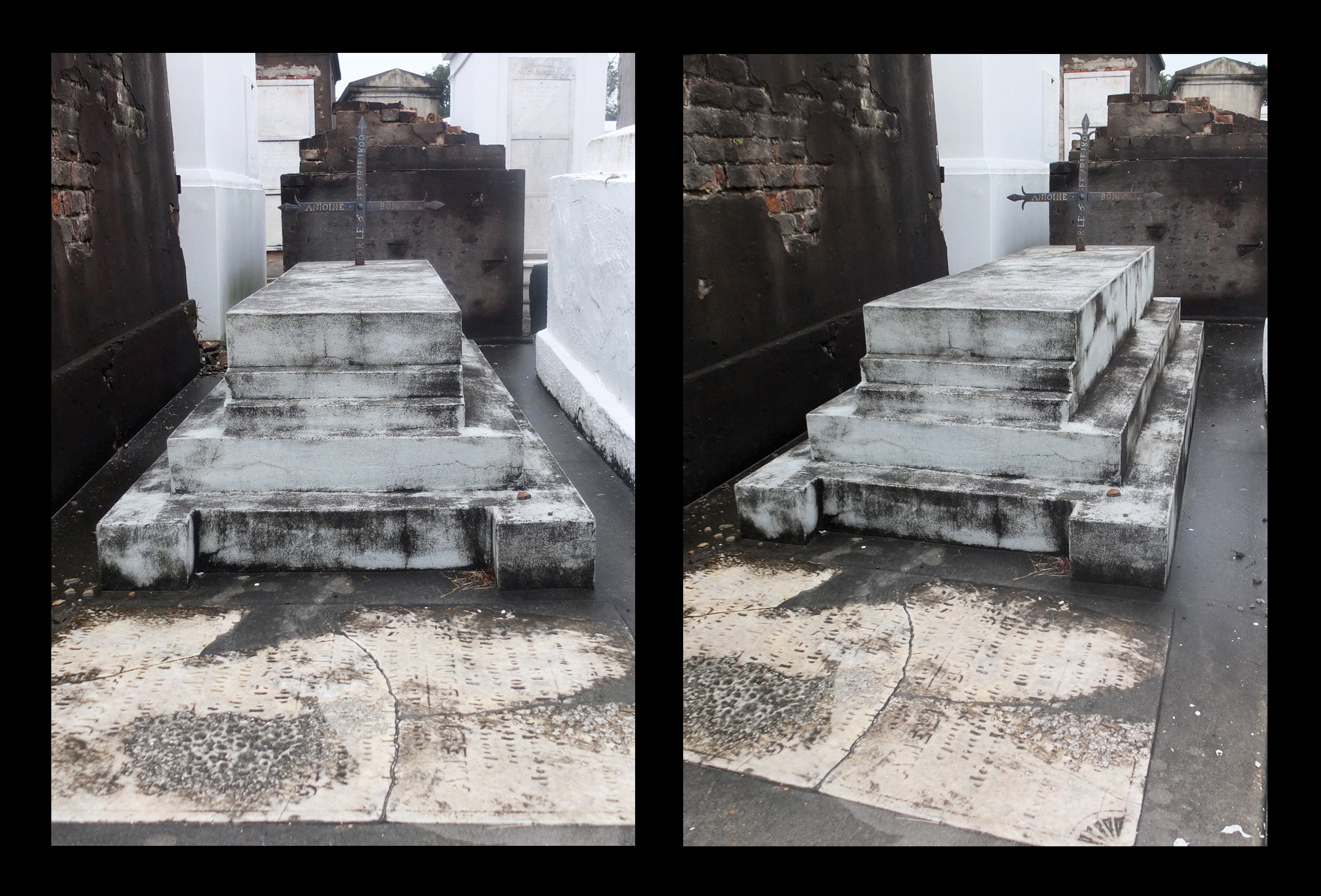
A typical step tomb. *
The other three types of tombs — wall, family and society tombs — are the most common.
Here’s the way it typically works in New Orleans.
When someone dies, they are buried in a traditional wooden coffin. That’s right, a wooden coffin. They are then placed in a tomb — whether it be a space in a wall, a family tomb or a society tomb — and left there, undisturbed, for a year and a day. After a year and a day, though, that space becomes fair game for another family member, another member of the society or someone who rented a wall space (more on this in a few).
After that allotted time period of 366 days, once the space is needed again, the previous remains are bagged up and moved toward the back of the tomb (they used to just be pushed to the back), and in goes the new coffin.
This process repeats, repeats, repeats — more often than not, a single tomb holds the remains of multiple people. In fact, we saw a wall tomb with more than a dozen family members inside one single slot; Renee said this is not uncommon.
Now, let’s talk specifics.

The wall tomb with the vase housed around 15 members of that particular family. *
Wall tombs are much like they sound like: multiple units housed inside a roughly coffin-depth wall. Some are owned by the diocese, and some are privately owned, like the painted one below, where an 80-something-year-old man’s grandparents are buried.
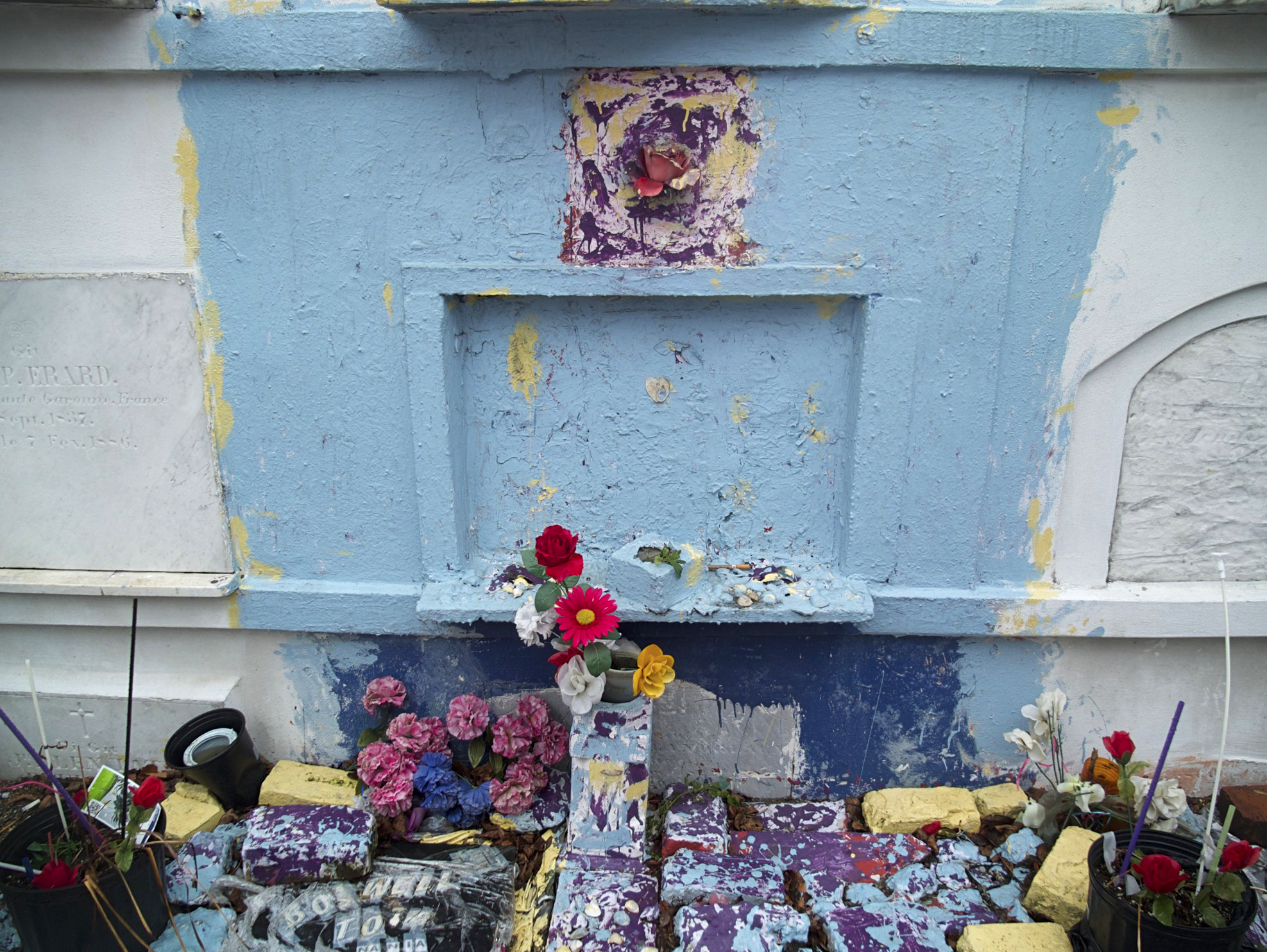
A member of this family still regularly hand-paints this tomb to honor his grandparents. *
The man who painted this tomb is the only one that has authorization from the diocese to decorate a tomb in this manner. While flowers and offerings are fine, this type of decoration typically isn’t; but Renee said the man does this with such a sense of reverence — to honor his grandparents — that he was granted special permission to keep on painting.
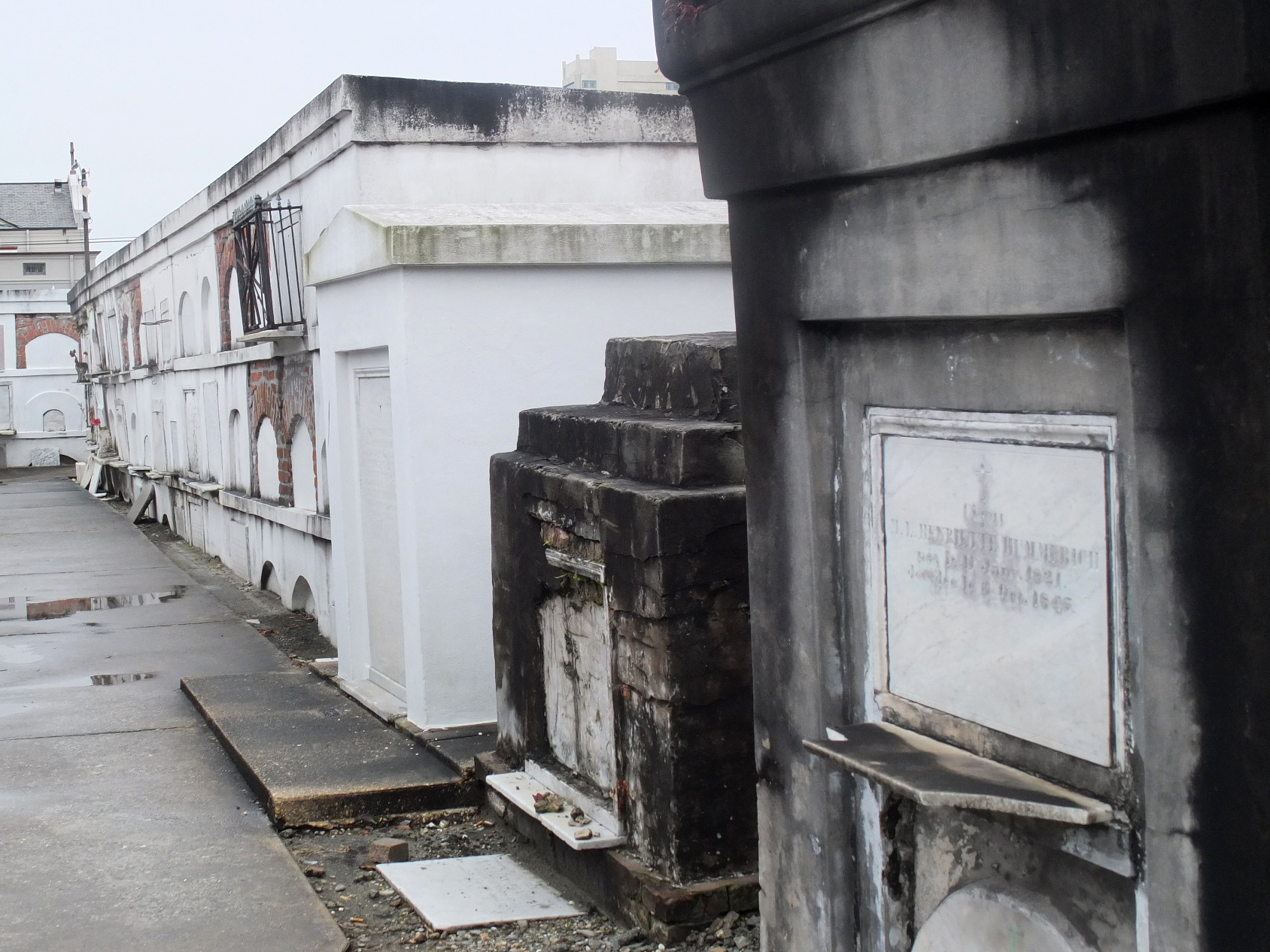
Wall and other tombs are interspersed throughout NOLA’s cemeteries. *
Wall tombs are also sometimes called oven vaults — in the summertime, the temperatures inside can get quite high, leading to more rapid decomposition.
Family tombs are just that — freestanding tombs owned by a family.

A typical family tomb. +
These are very prevalent in many cemeteries in New Orleans, and are typically what springs to mind when you think of above-ground burials.

A row of tombs. *
Family tombs can have several units per tomb, or just one. If there are several units, multiple members of a family that are newly deceased can be in the tomb at any given time.
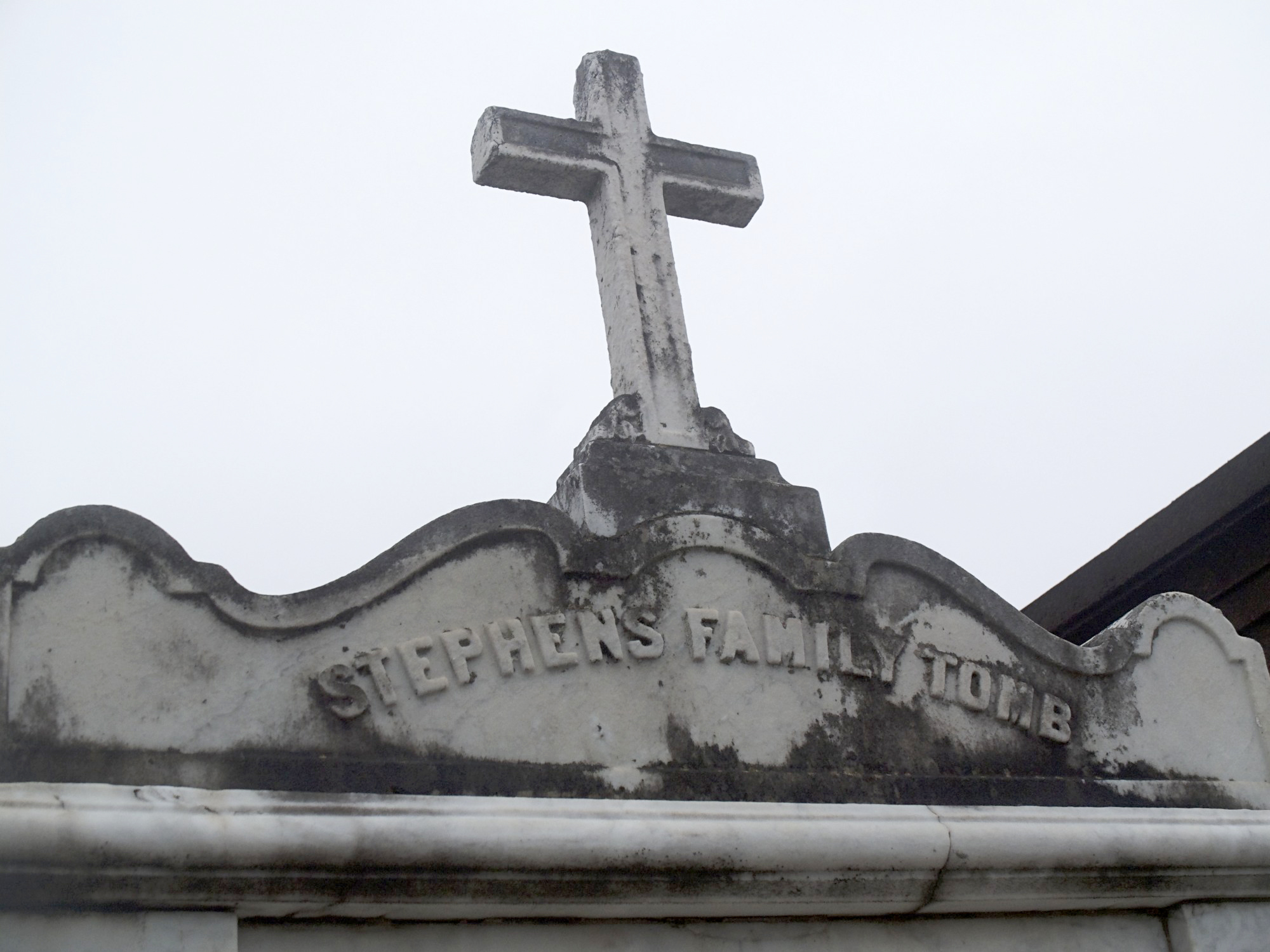
Tombs have a variety of adornments, ranging from crosses to angels and more. +
For instance, let’s say the Smith family has a tomb with two units. Bob dies in February and Susie dies three months later, in May. Because there are two units in the tomb, they can be buried together. However, if the Smiths had a tomb with only one unit, Bob would already be buried there when Susie died — and he couldn’t be disturbed until the following February. Therefore, the Smiths might opt to rent a wall unit for Susie, until her remains could be permanently moved to the family tomb, 366 days after her death.
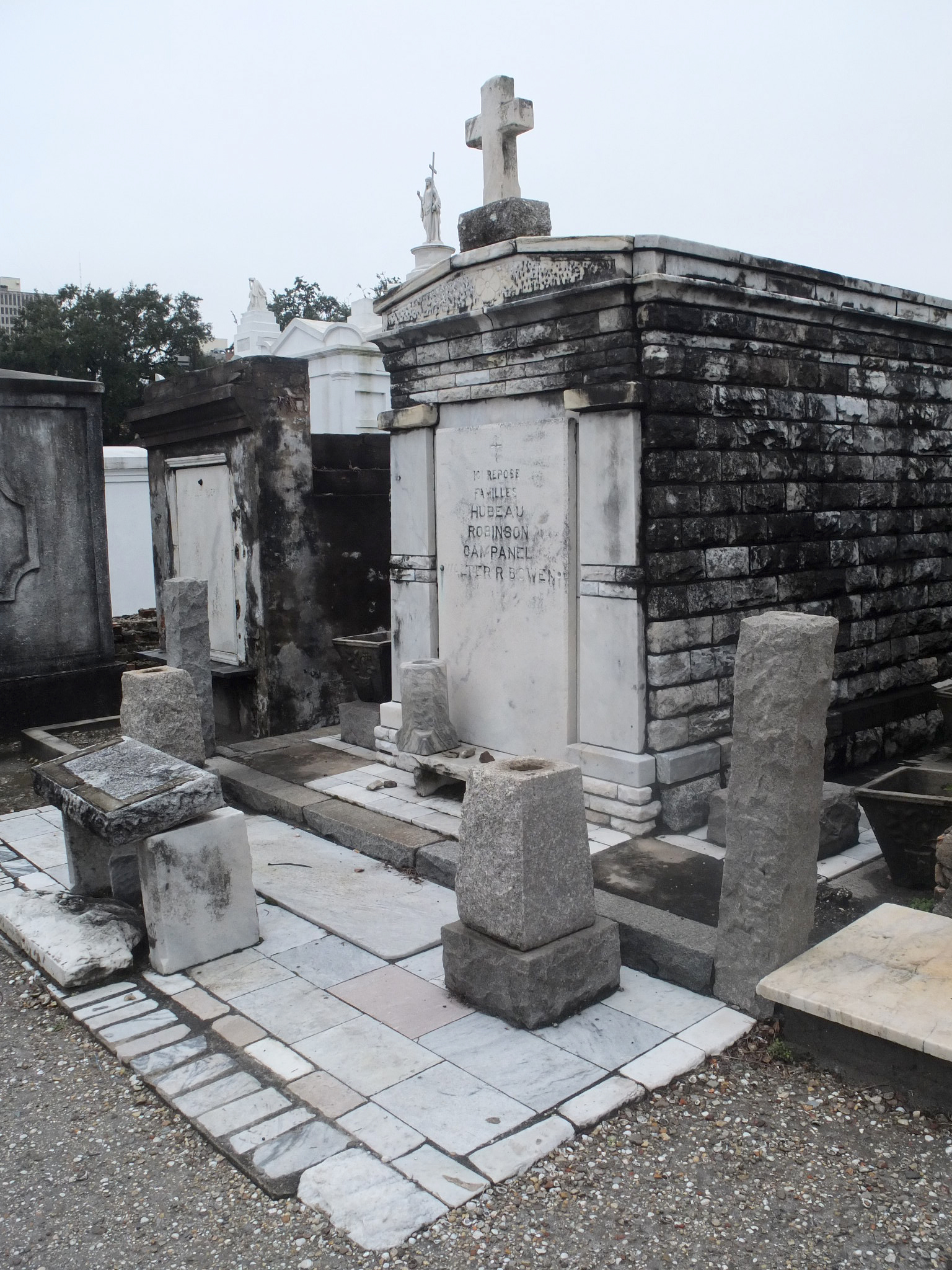
This tomb has a nice front-yard area. *
Family tombs come in all shapes and sizes.
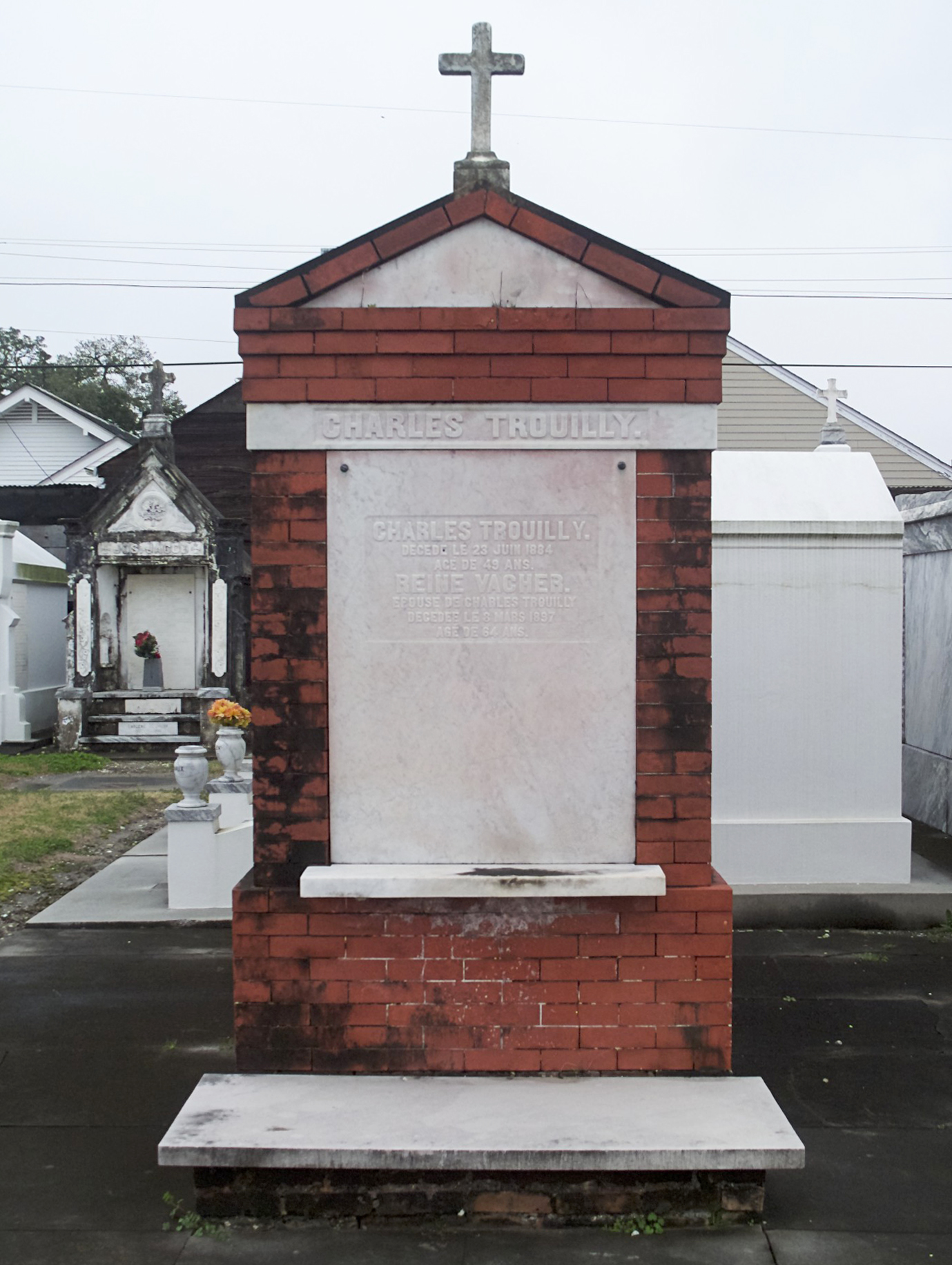
Brick facades are less common in the newer cemeteries, but still exist. +
They are also made of all sorts of materials, and have as many kinds of adornments as there are burial spaces in New Orleans.
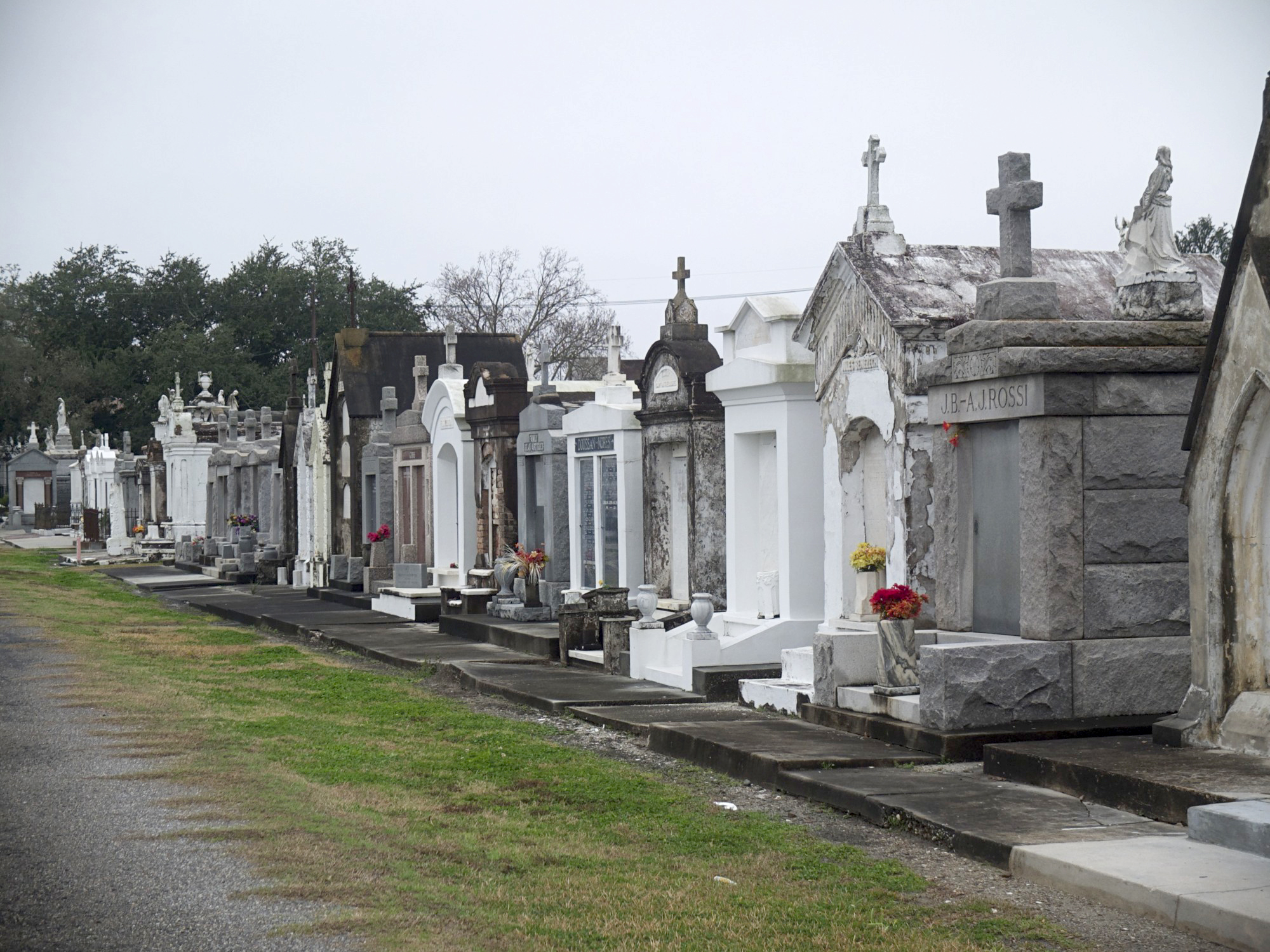
Every tomb is a little bit different. +

This double tomb has plenty of space around it. +

Angels are a common adornment. +
They really allow families to show their individuality in an interesting way.

I’m seeing in triplicate. +
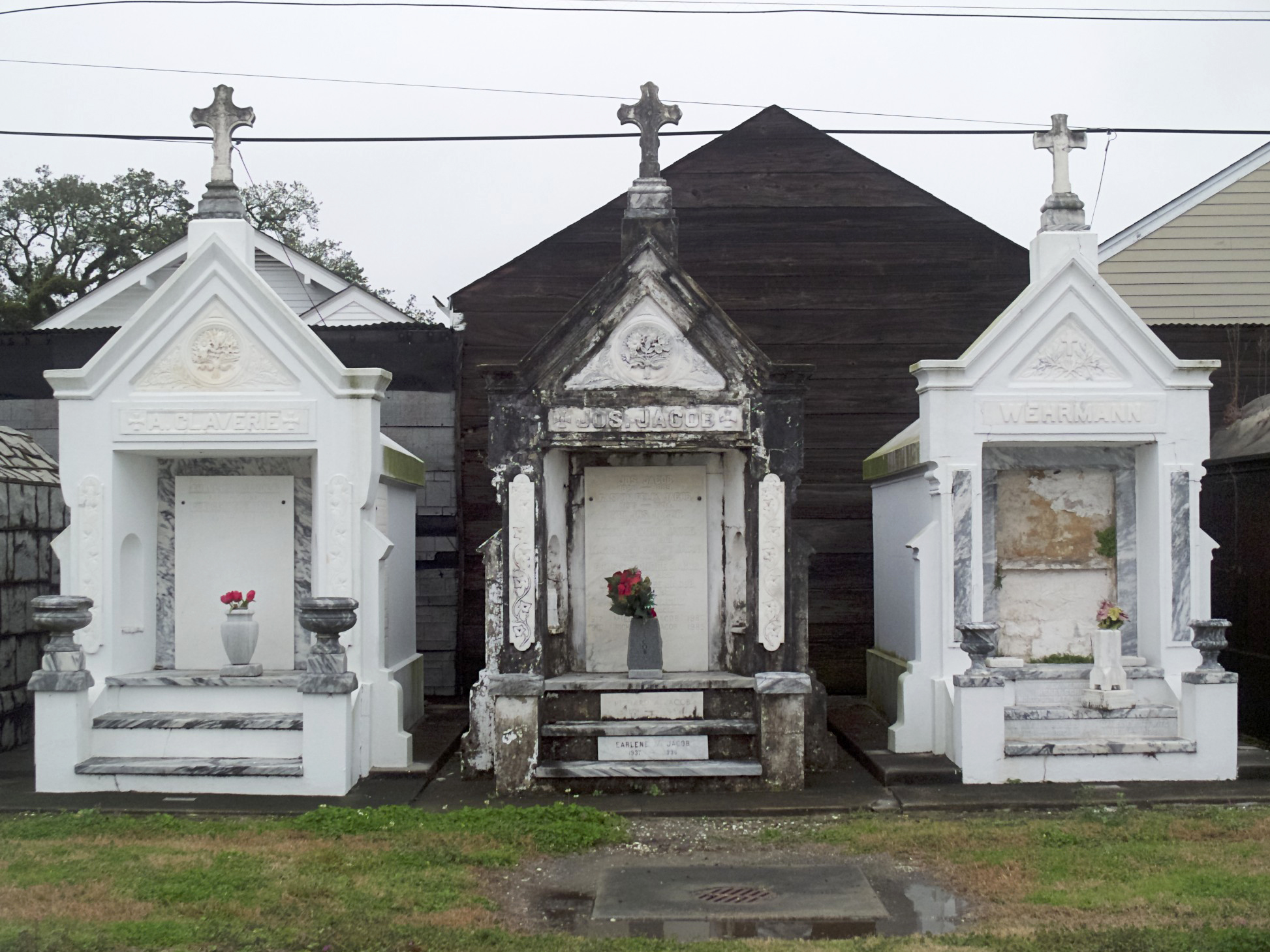
All similar, yet distinct. +
Society tombs are like large family tombs, except they can be owned by any group of people — hence, “society.” Dues are paid in life to the society, and members are guaranteed a resting spot upon their death.

Society tombs often have more units than family tombs. +
Societies represented range from everything from military to immigrant groups.
Cities within a City
While Saint Louis No. 1 is the city’s oldest existing and, arguably, most famous cemetery, it is far from the only final resting place in NOLA.
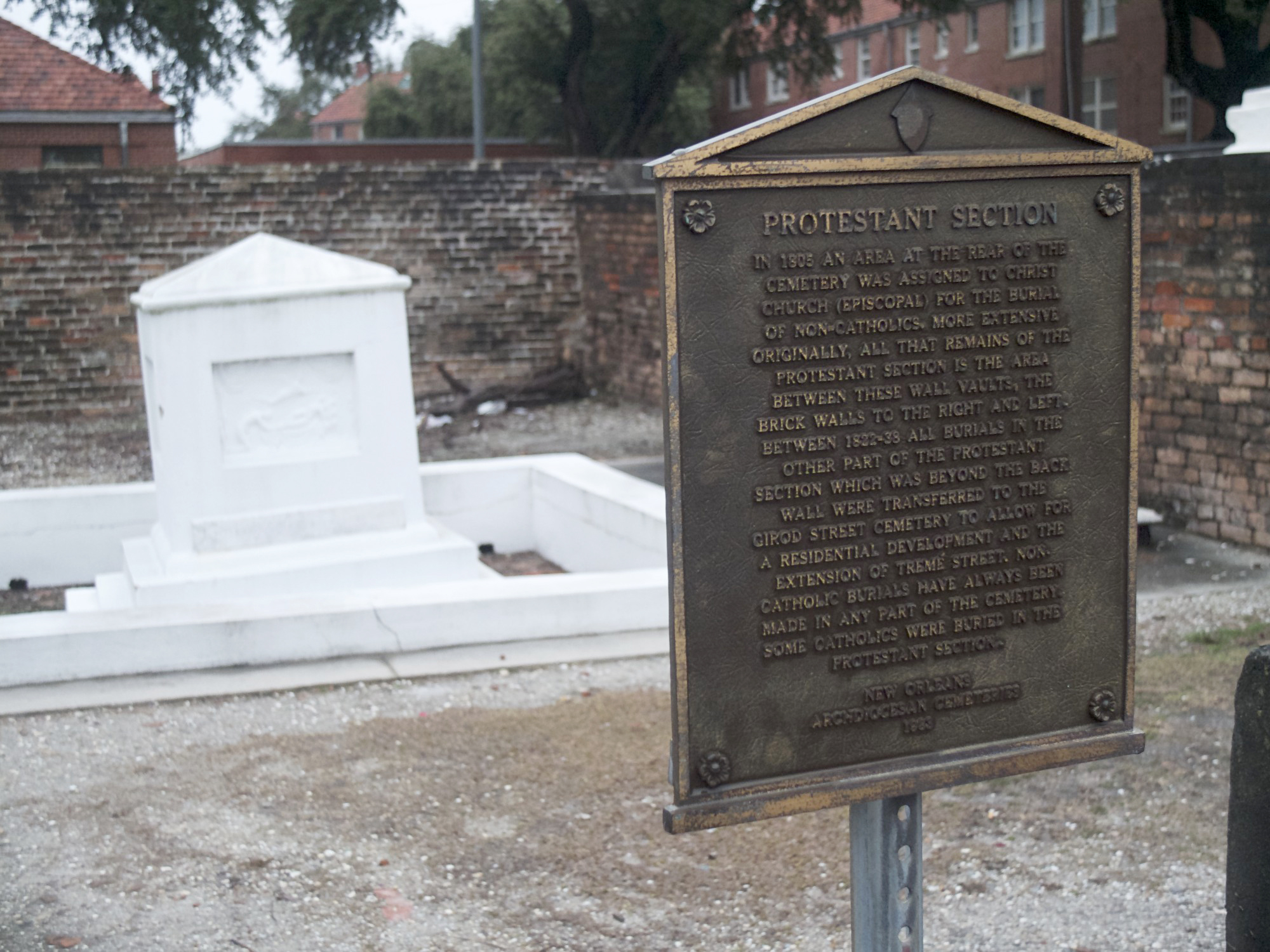
Saint Louis No. 1’s Protestant Section. Much of that portion of the cemetery was largely encroached upon for the city’s expansion of Tremé Street in the 1820s. Affected burials there were moved to another cemetery before the expansion. *
The city’s official tourism website lists no fewer than 15 cemeteries. The website New Orleans Cemeteries, dedicated to the cemeteries of the city, lists more than double that number.
No matter the number of cemeteries, though, rest (pun intended) assured: New Orleans is a city populated by many smaller cities and their citizens — the cities of the dead.
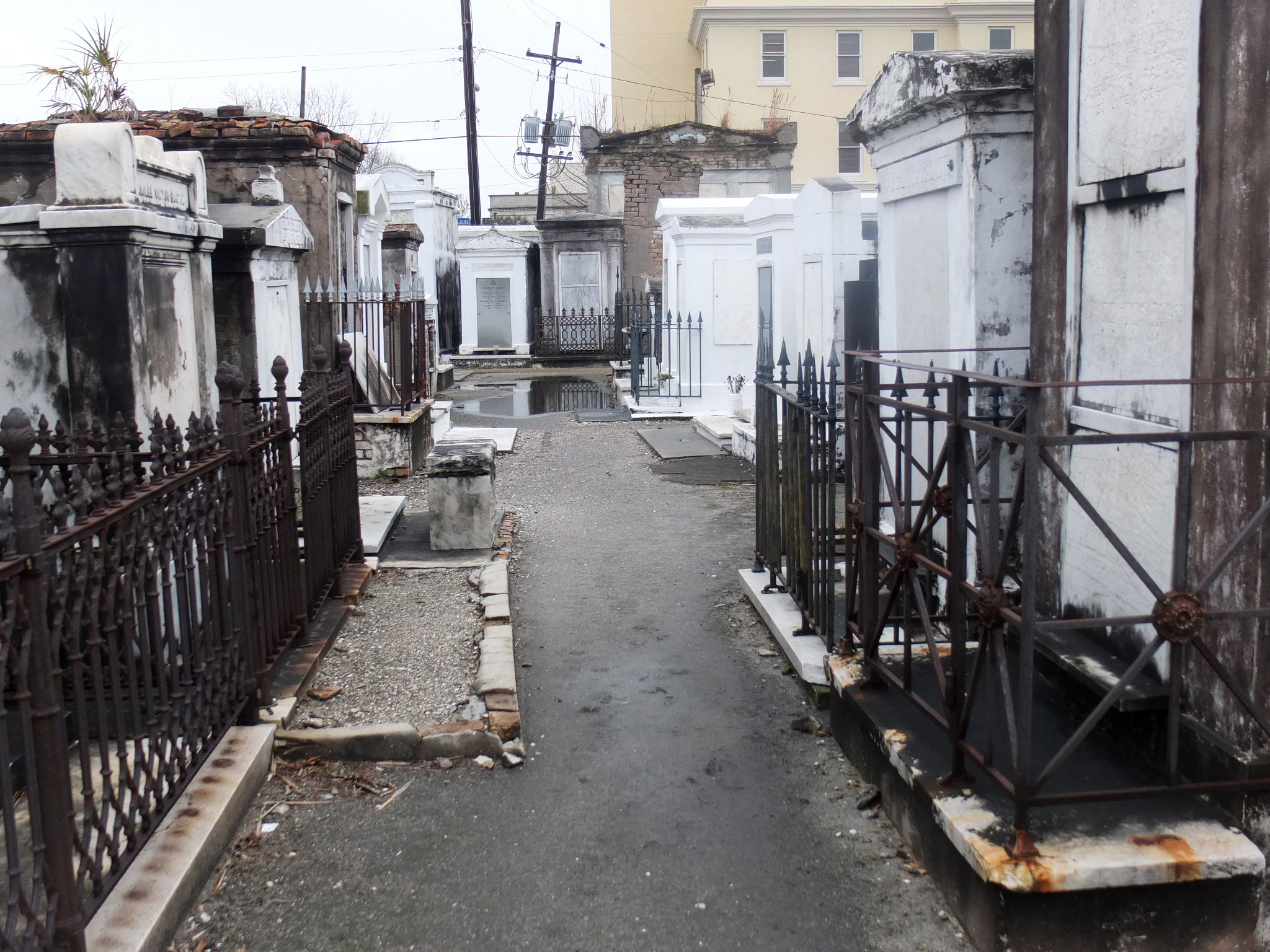
An alley in a city of the dead. *
—
Coming up in a second, and final, post about New Orleans cemeteries later this week, we’ll touch upon the famous residents of Saint Louis No. 1 (including the famed voodoo queen Marie Laveau), a famous Saint Louis No. 1 landmark (hint: Dennis Hopper), the state of cemeteries in NOLA, and some thoughts on rethinking the way we treat death in today’s society.
* denotes a photo taken in Saint Louis No. 1
+ denotes a photo taken in Saint Louis No. 3
 tiltandswing
Trackbacks