For the Love of Fossils
When I was a kid, I wanted to be a doctor and the president, and an archaeologist on the side. I was ambitious. I also thought you could have an “operating room name” like actors have stage names; naturally, I picked Amie, because it’s juuuuust different enough from my real name (Jamie) and it’s also a non-traditional spelling of Amy. What can I say? I was … ok, weird. I was weird.
ANYWAY.
I’m telling you all of this because of the archaeology part. I was fascinated with finding old stuff in the ground (listen, I was 5 … I now know archaeologists do a lot more than that). Turns out, I STILL AM! So earlier this year, I remembered going to a stream with a friend and her father, sifting rocks and sediment and finding fossilized shark teeth and squid parts. I turned to my trusty friend Google, and found it: Big Brook.
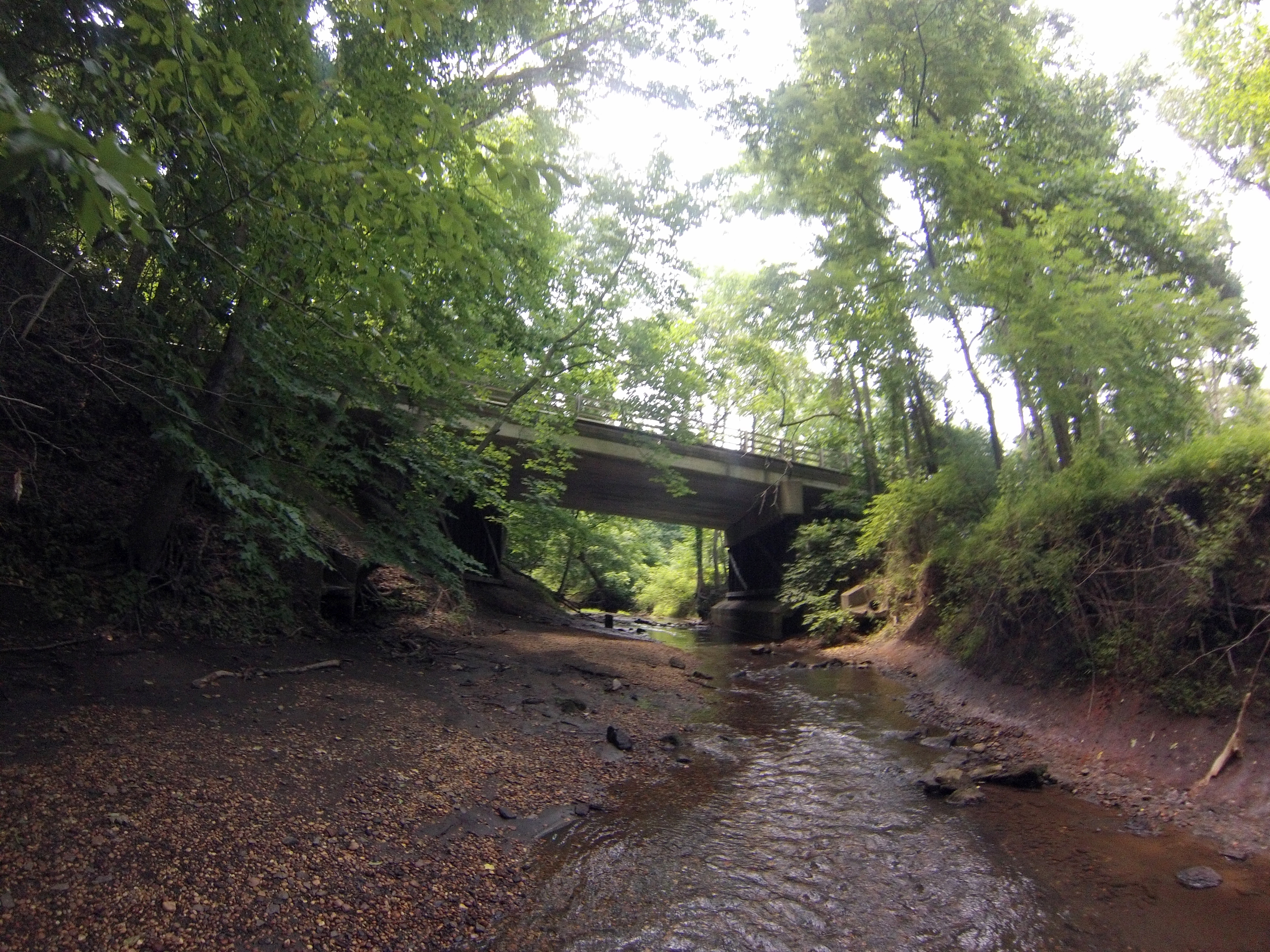
According to the county, Big Brook Park consists of 379 acres of farmland formerly used by the now-closed Marlboro Psychiatric Hospital. The Monmouth County Park System purchased that land in 1997, and an additional 36 acres in 2010, bringing the park up to 415 acres. In addition to plenty of green space, though, the park offers its eponymous brook — which cuts through cretaceous-era sediment deposits.
This means fossils.
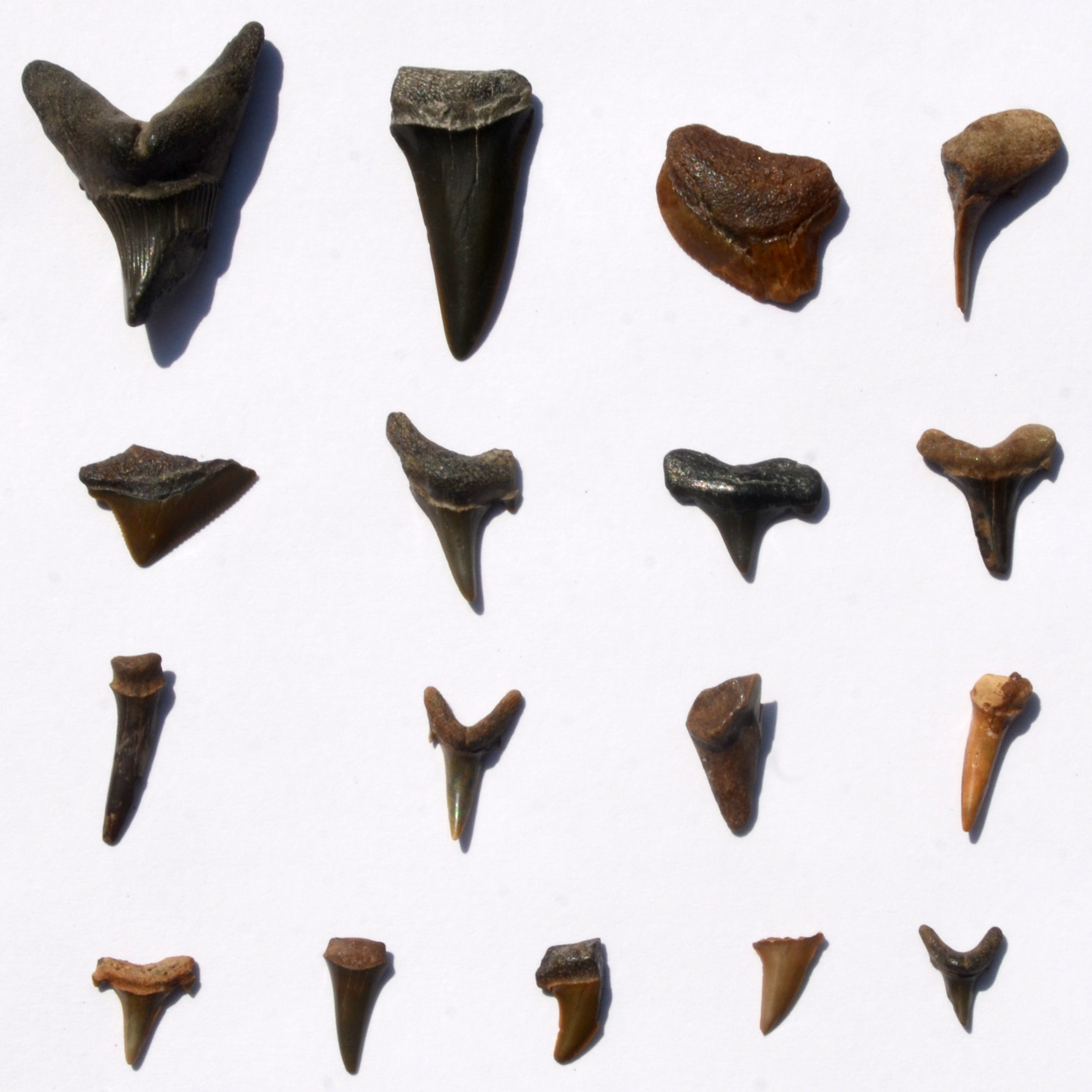
Most notably, fossilized shark teeth (as seen above; the largest is a bit over an inch long). The stream bed holds many types of fossils which have been mostly identified by people far more knowledgeable than me, so I won’t even hazard a guess at what kind of teeth those are (I tried, but so many look so similar!).
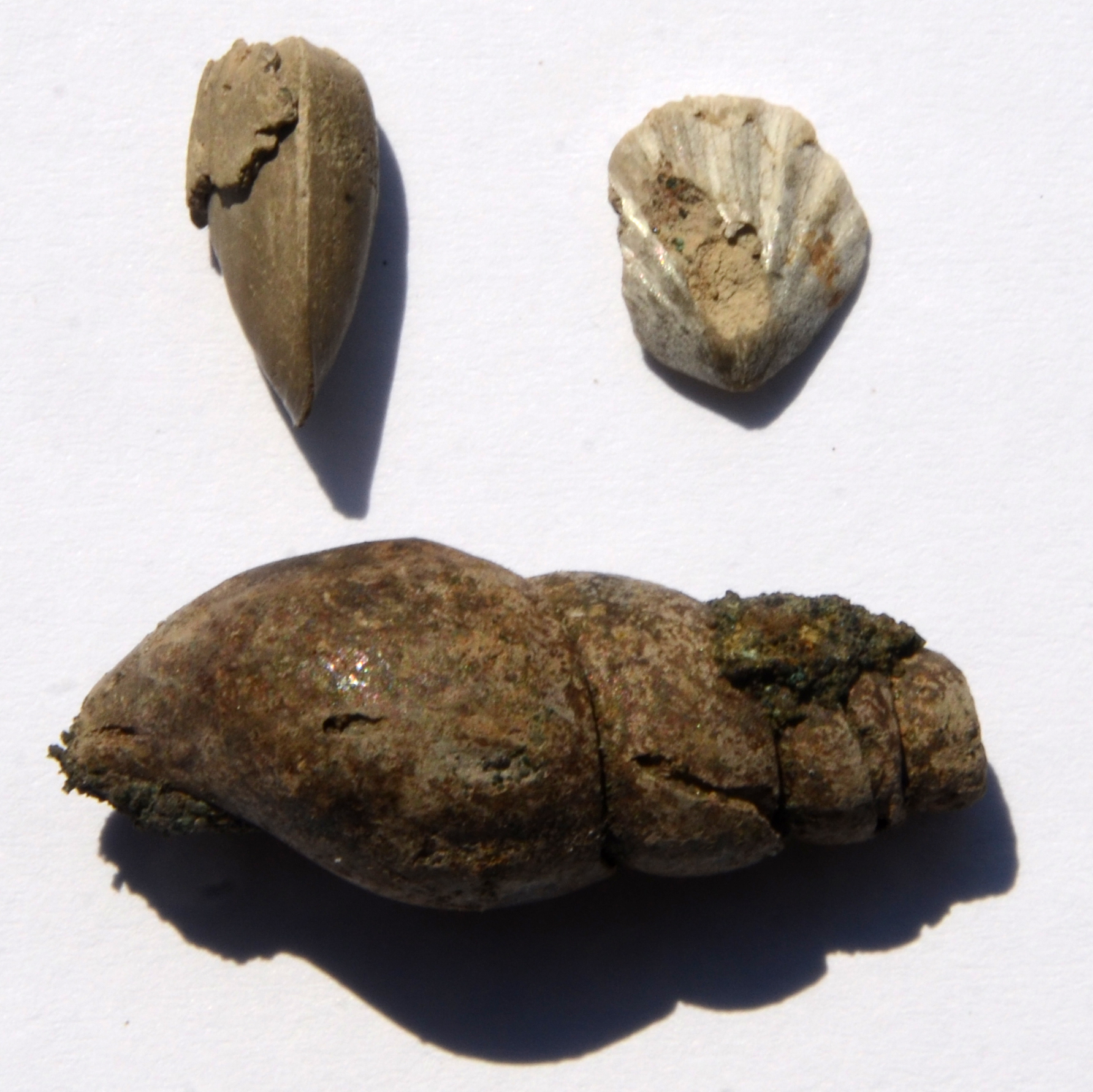
There are also fossilized shells (above, the biggest about 1.25 inches long), the internal shells of creatures that resembled squid, and more.
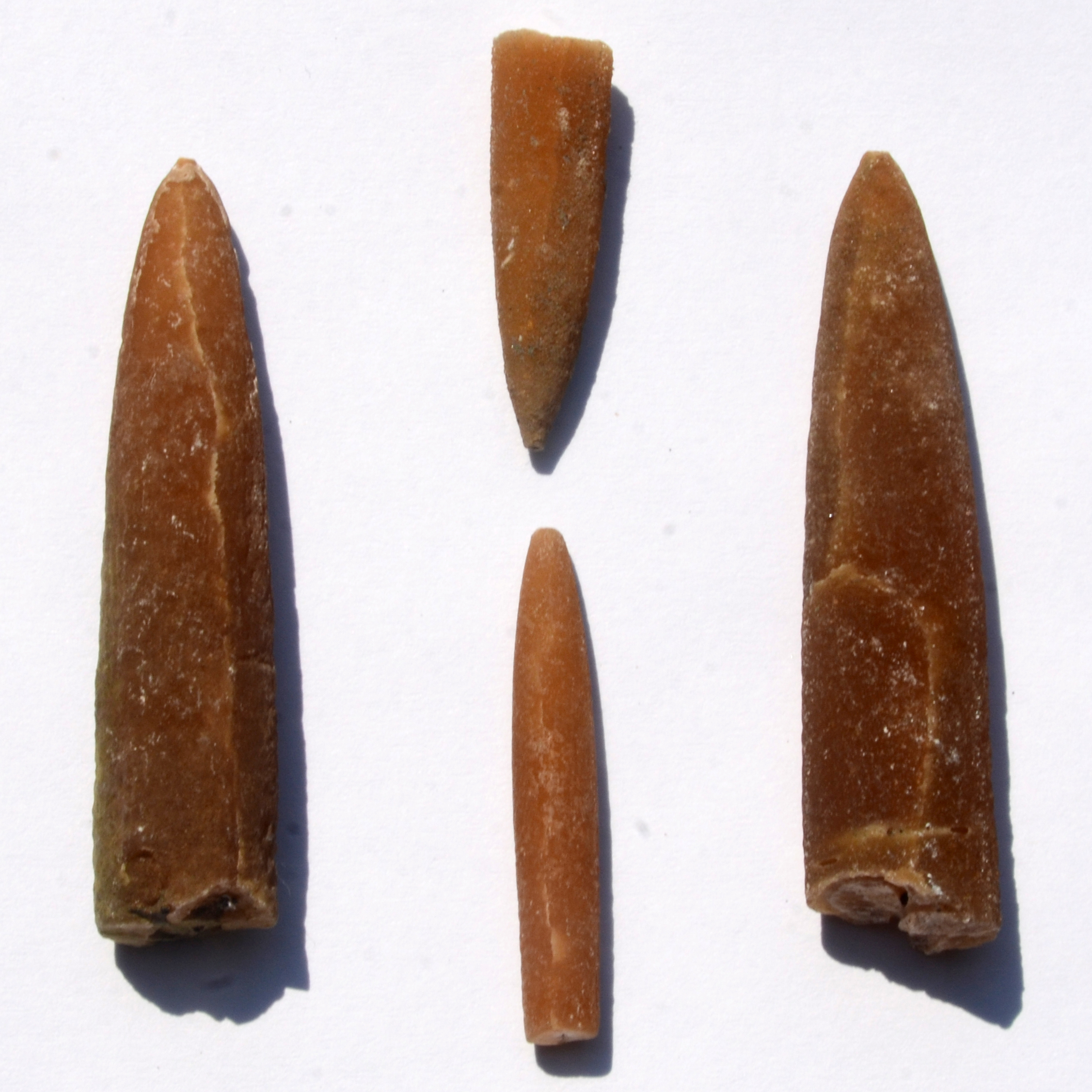
Actually, there’s a lot of squid stuff (above), at least in the portion of the stream I’ve been in recently. It’s everywhere — it shows up frequently when you sift for debris, you can spot it right on top of the stream bed and pick it right out, and sometimes, other fossil hunters leave small piles of it on the side of the stream. It literally litters the stream banks after a good rain storm. We’ve recently pulled in pieces as small as a quarter of an inch, and as large as about 6 inches.
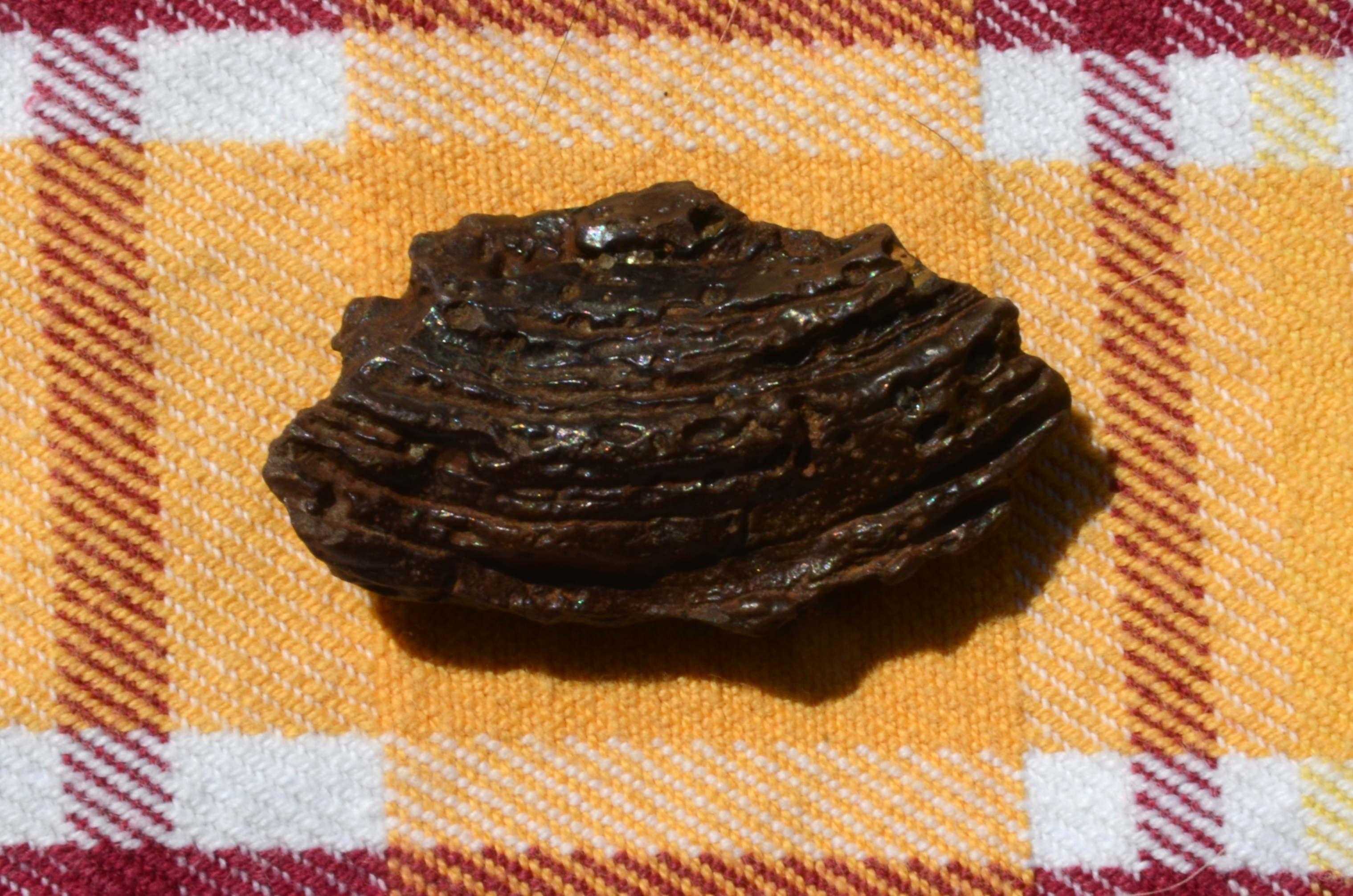
Among the other things at big brook are pieces of fossilized wood (I think that’s what’s pictured above — any experts out there?). Dinosaur bones have been found (rarely), and one super-lucky fossil hunter even found a dinosaur claw!
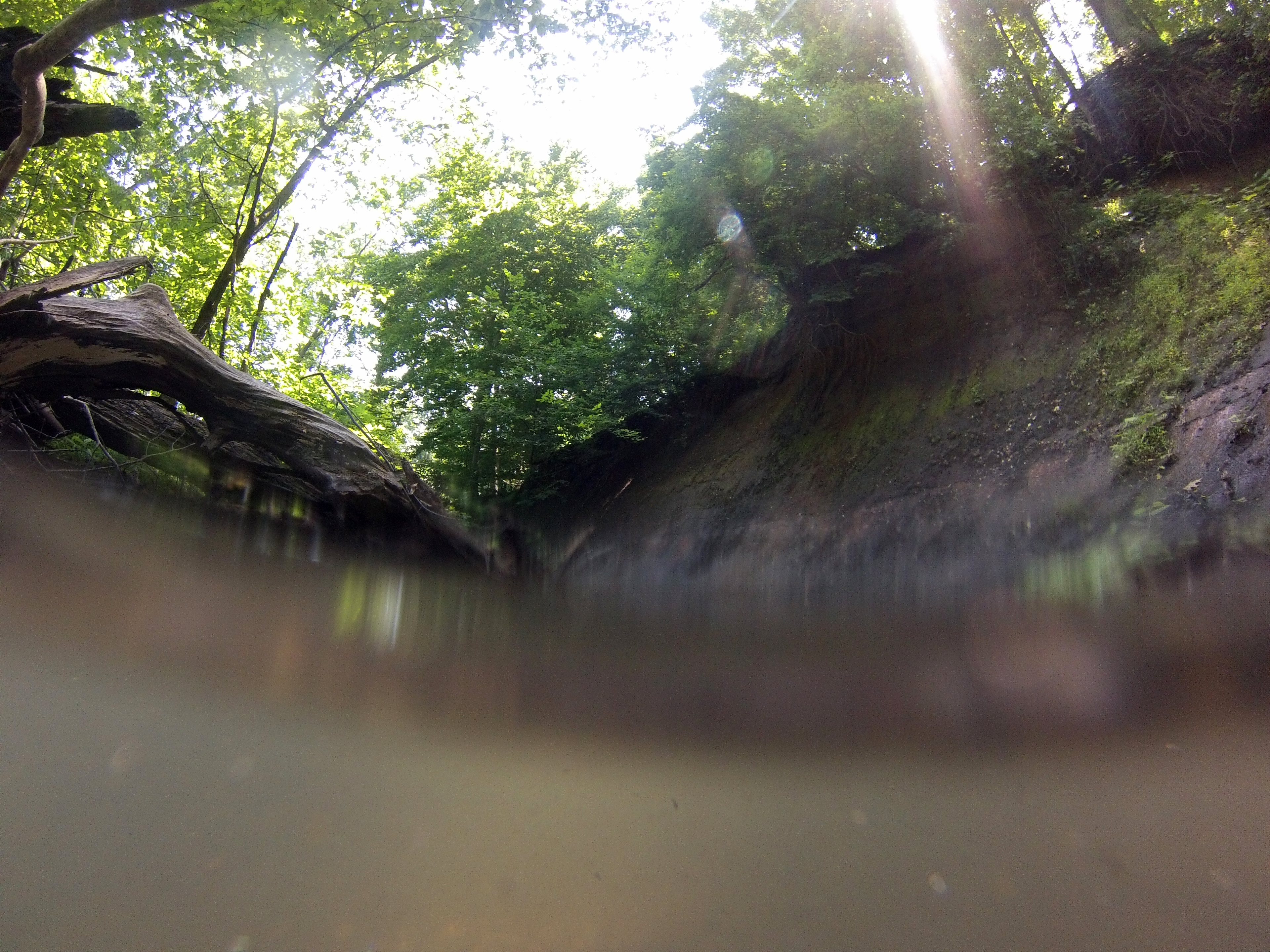
So, how do you do it?
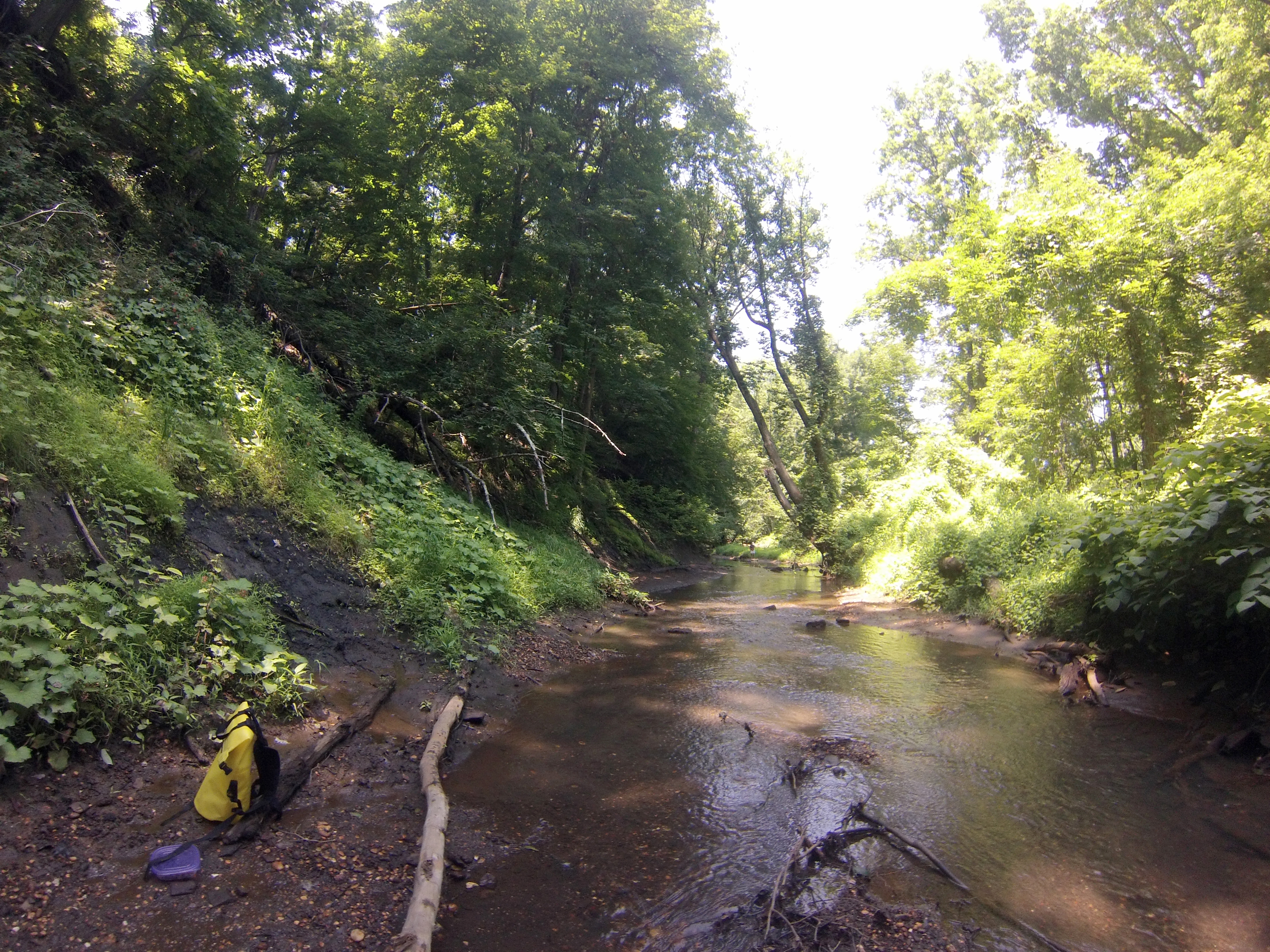
How do you search through this stream for fossil treasure?
Just a few simple tools (packing list to follow at the end) and you’re ready to go! First, you need close-toed shoes. This is a must. The stream does have broken glass in it and you have to walk directly through it. You also have to walk down a fairly steep bank to get to the stream (if you go the way I did; more on that later), so you want a shoe with a substantial sole. Bug spray is also your friend; you are in the woods, after all.
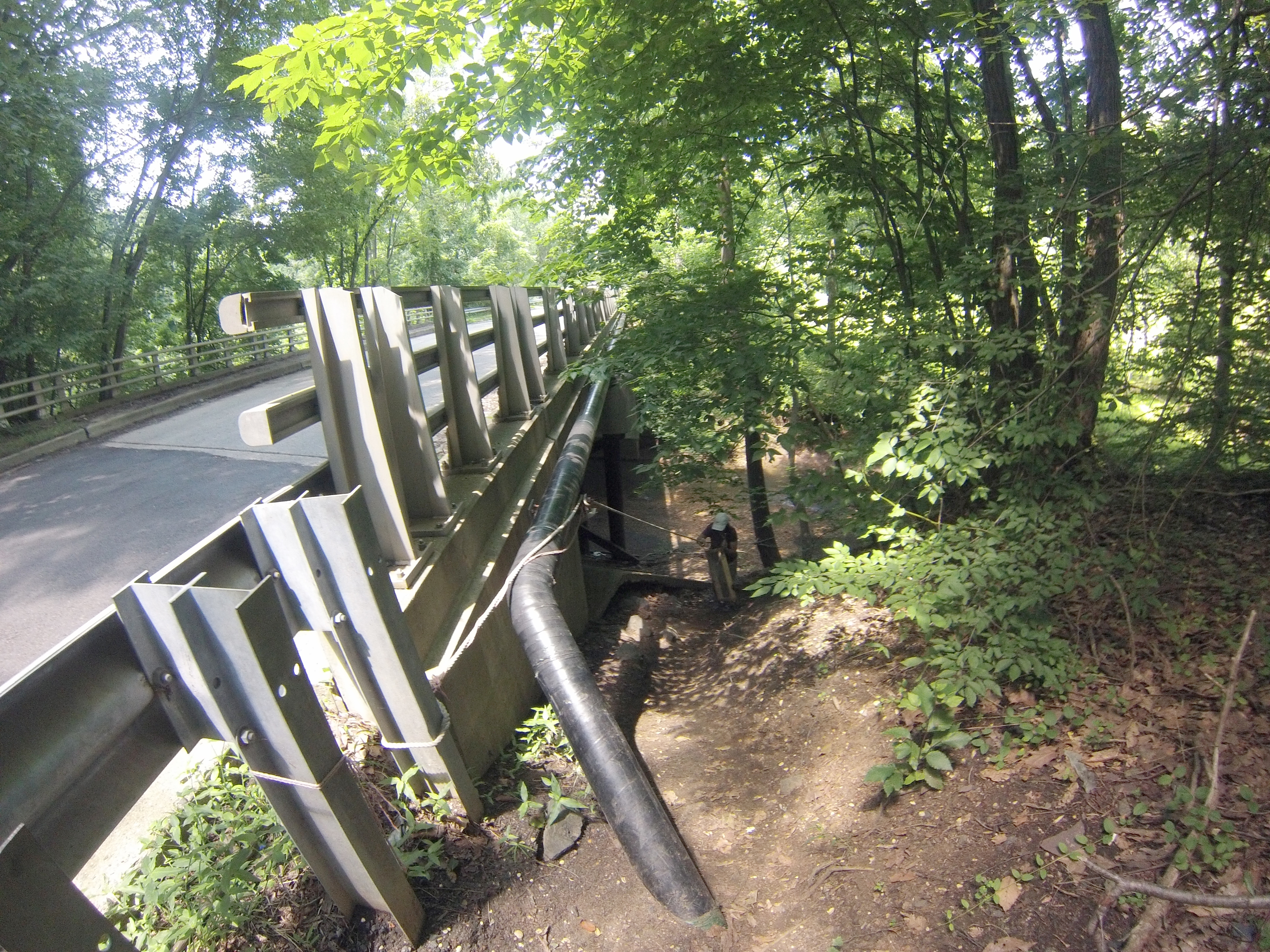
Fossil Finding Friend Mary Lou bravely makes her way up from the stream.
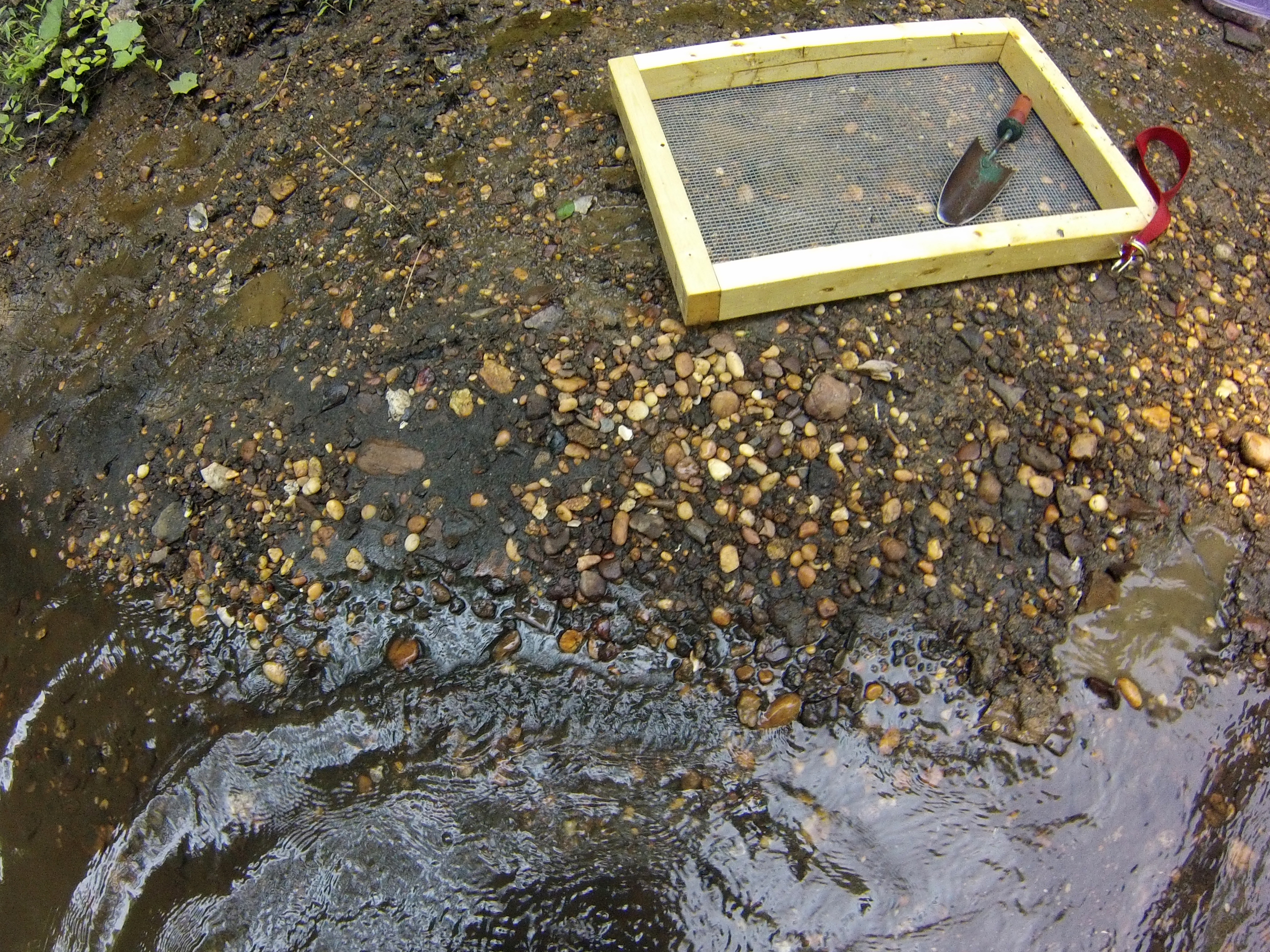
Once you make it to the stream, you’re going to need your actual fossil-finding gear. This is some pretty simple stuff — a trowel, a screen and somewhere to keep your finds.
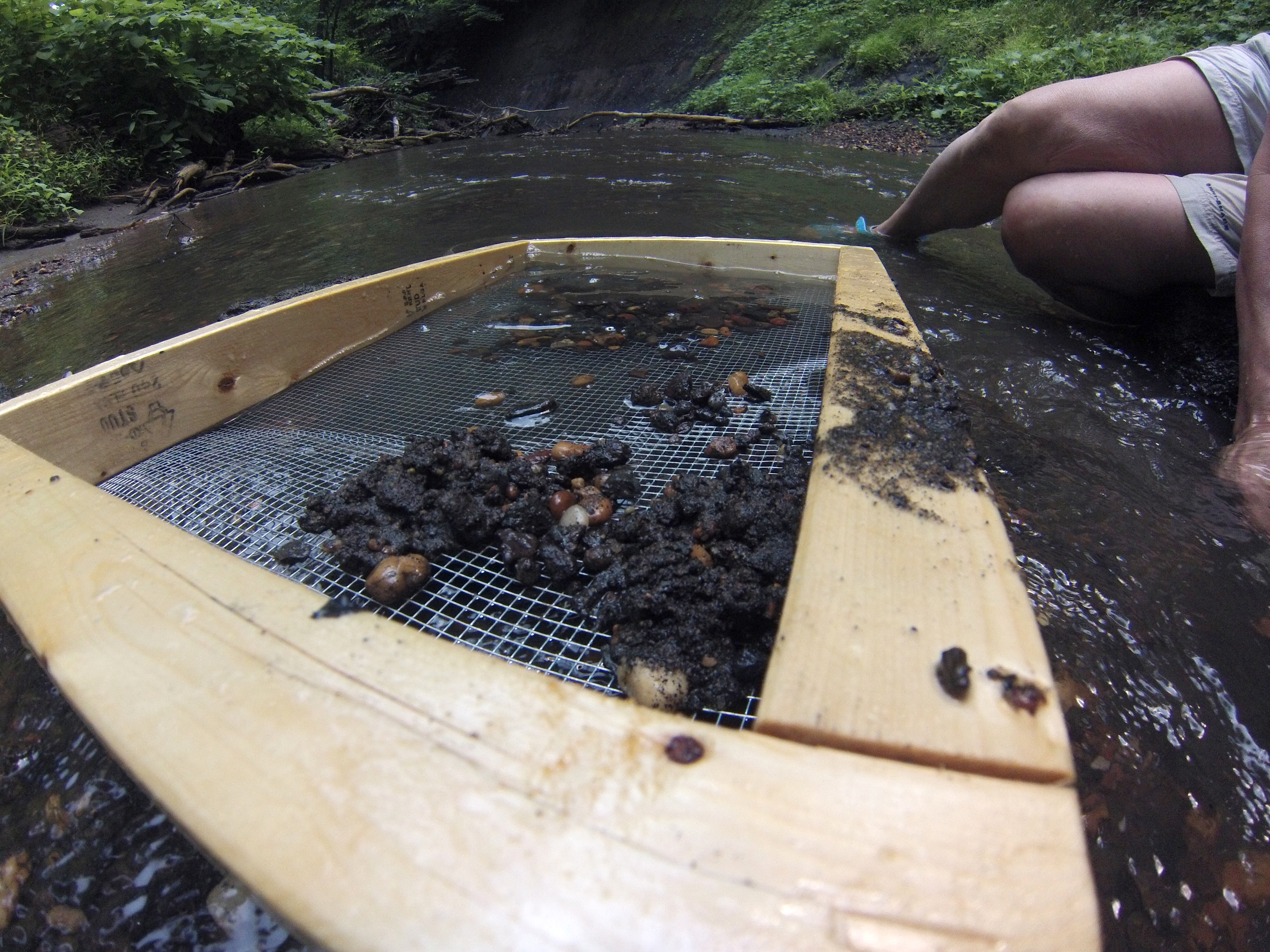
I made my own screens. They are simply a wood frame with 1/4-inch mesh on the bottom. You scoop material from the stream bed into the screen with your trowel, sift it through the water, then carefully sort through what’s left for fossils.
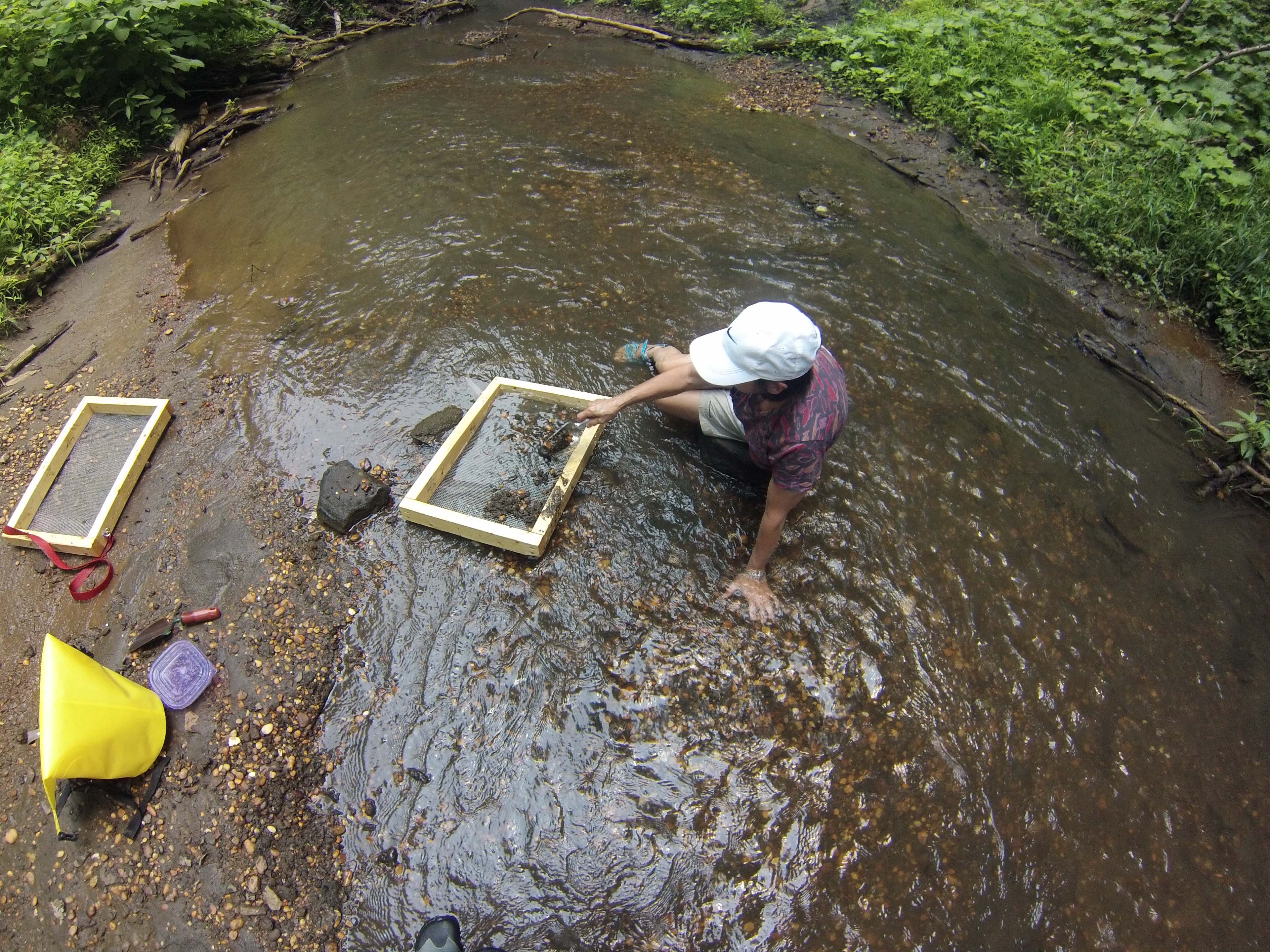
Sift, Mary Lou, sift!
It’s important to note that Big Brook has a few rules. Parties over 14 people need a permit to hunt for fossils there. Your trowel cannot be longer than six inches, and screens must be no larger than 18-inch squares (the screens pictured here are slightly larger than that; they were accidentally brought on a trip instead of smaller ones. Do as I say, not as I do, please! I’ve found 18-inch squares work nicely, as do rectangles in the realm of 12-by-18 inches and smaller). Additionally, you can only take home five fossils per person (the ones pictured here are from multiple trips/people).
IF YOU GO
I’ve found a few sets of directions to Big Brook online, and I’m sure others have devised many ways to get into the stream. I’ve personally parked off Boundary Road in Colts Neck and walked down the marked path there. Just be sure to abide by the signs — this site marks the line between public and private land, and you can’t fossil hunt (or trespass on) the private land.
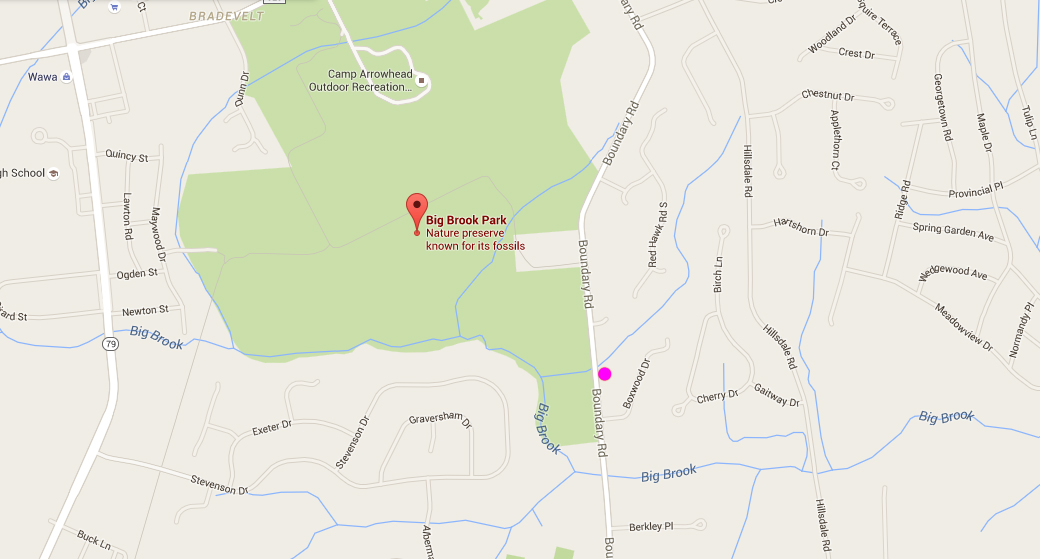
Click on the map above (thanks, Google!) to enlarge it — my preferred parking spot is on the side of the road before the bridge, where the purple dot is (I entered 153-161 Boundary Road, Colts Neck, into my phone’s maps application to get there).
Follow the signs down to the stream, next to the bridge. It’s a bit steep going down, though, so be careful! As of a week before this was published, some very helpful fossil enthusiast strung a rope down the side of the bank that you can hold as you descend. Do that, and do it slowly, especially if you’re carrying a bunch of gear.
And speaking of gear …
JAMIE’S HANDY-DANDY PACKING LIST
- Close-toed shoes with solid soles
- Bug spray
- Sunscreen
- A hat (it’s hard to sift through stuff with sunglasses on)
- One five-gallon bucket per person — use this to hold your stuff as you walk, and then to invert in the stream and sit on while you sift (there’s no other place besides the muddy banks and the stream itself, so trust me, bring a bucket)
- Screens — usually one or two people to a screen is a good amount
- Trowels — blades must not be longer than 6 inches; look for a trowel that is a little on the wider side to help collect more sediment to sift
- A container (plastic bag, plastic Tupperware or similar) to hold your finds
- Water — hydration is happiness!
- Towels to clean off with after you get back to the car (and to sit on if you pull a Jamie and end up sitting right in the stream to “be one with the fossils”)
- A first aid kit, because you never know — and there is quite a bit of glass in the stream
THE GOODS
After you leave Big Brook, you still have some fun ahead: cleaning off and identifying your finds. I run my fossils under cool tap water in a colander until they’re clean. If they’re really encrusted with muck, I soak them in a mild solution of tap water and a little bit of dish soap, and use an old toothbrush to clean off the sediment.
The two pages I’ve linked to in this post — Derek Yoost’s njfossils.net and fossilguy.com —are both really great spots to find out more information about Big Brook, as well as identify your finds. They’re very comprehensive!
No go forth and fossil hunt, and dazzle your friends and family with shark teeth necklaces galore!
 tiltandswing